Europe has long been Vietnam’s second largest export market, after the US, and the EVFTA continues to bring tariff advantages to Vietnamese businesses.
EVFTA and the “thirst” for sustainable products
Europe is currently a major export market for Vietnam and Vietnamese goods still have a lot of room for growth in this market, especially in the interior and exterior decoration, handicrafts, fashion, gifts, etc.
The most important advantage is the Vietnam – EU Free Trade Agreement (EVFTA), which not only helps Vietnamese goods reduce import tax to 0% for many items, but also provides a transparent and stable legal framework, creating confidence for European importers.
Workshop “Accelerating the export of contemporary lifestyle products to the European market” held on the afternoon of August 14 in Ho Chi Minh City
At the workshop “Accelerating the export of contemporary lifestyle products to the European market” held by the Association of Vietnamese Enterprises in France, the French Chamber of Commerce and Industry in Vietnam (CCIFV) and ITPC on the afternoon of August 14, sharing that the current consumption trend in Europe is an advantage for Vietnamese products, Ms. Nguyen Dac Boi Quynh – Director of Trade Promotion of Vietnamese Enterprises (CCIFV) said: “The European handicraft market will reach about 293 billion USD in 2024, expected to increase to 576 billion USD in 2033, with a compound growth rate of 7.41%. In France alone, the scale will reach 31.05 billion USD, with a forecast growth rate of 8.3%/year”.
According to Ms. Quynh: “Millennials account for 45% of the market share of handicraft consumption, while more than 70% of urban consumers prioritize handicraft products. This is an opportunity for Vietnamese goods, with their strengths in materials and craftsmanship, to meet market demand.”
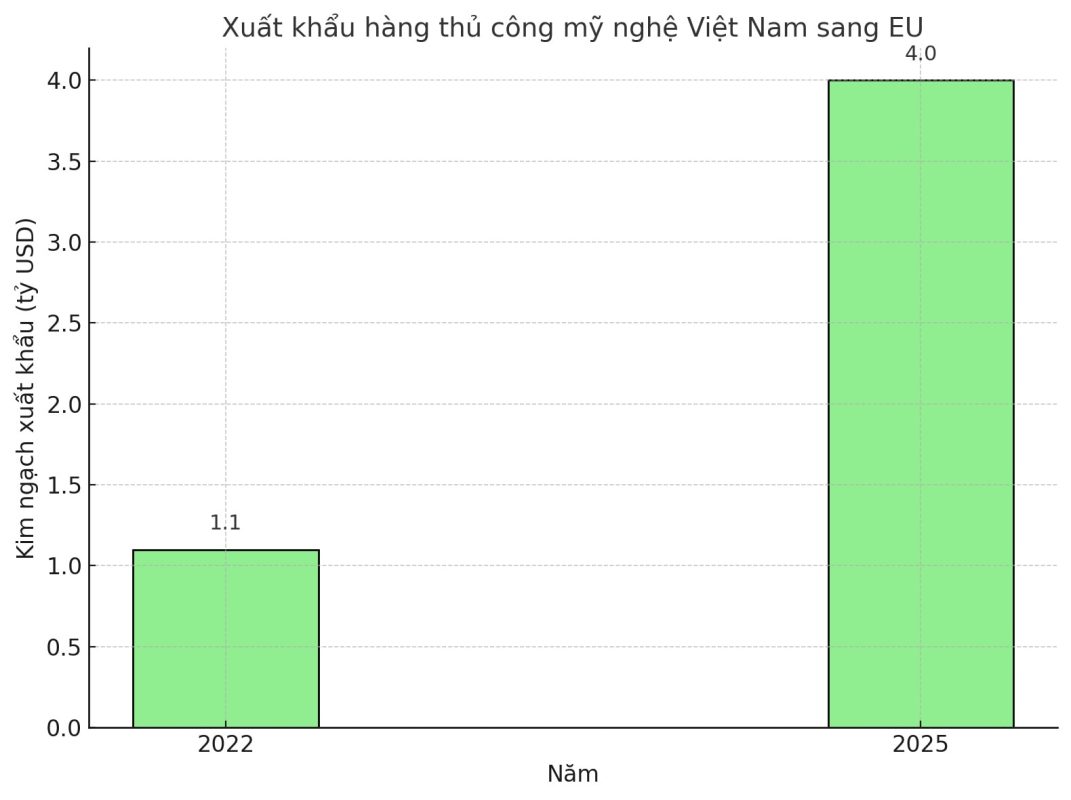
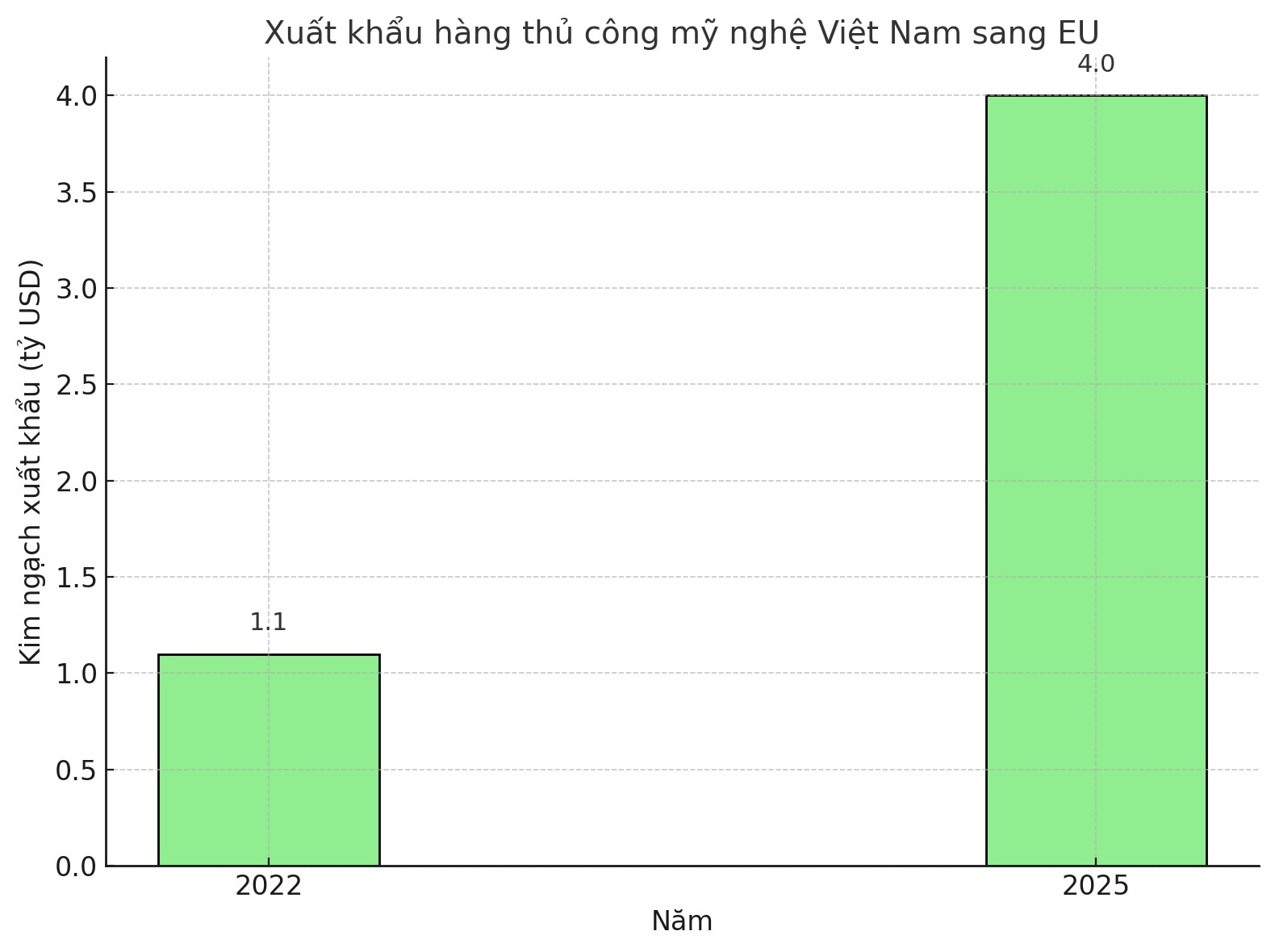
The trend of “green consumption” is also booming, especially with products made from rattan, bamboo, and sustainably certified plantation wood. According to ITPC, 73% of the value of interior decoration products in Europe is imported from developing countries, with turnover increasing from 2.2 billion EUR in 2018 to 3 billion EUR in 2022. In 2022, Vietnam exported more than 1.1 billion USD worth of handicrafts to the EU, aiming to reach 4 billion USD by 2025.
Overcoming legal barriers – Increasing competitiveness for Vietnamese enterprises
Despite great potential, Vietnamese enterprises that want to conquer and maintain their position in Europe need to overcome the system of strict standards and regulations. Ms. Chu Lan Phuong – Lawyer of Ceven Law Firm, Member of ABVietFrance analyzed: “New regulations such as the General Product Safety Regulation (GPSR), the Product Liability Directive (PLD) and the Eco-Design Regulation (ESPR) force enterprises to increase their responsibility, have legal representation in the EU and ensure traceability of raw materials. In addition, there are requirements to comply with REACH, EUDR and CE label if they want to maintain their position”.
In addition, Vietnamese enterprises also face competition from large-scale, low-cost manufacturing countries such as China and India – competitors that both mass produce at low prices and quickly improve quality and design. Meanwhile, many Vietnamese enterprises still produce in a fragmented manner, lack strong brands and have not met the requirements for continuous design innovation.
To accelerate, enterprises need to improve their products and proactively protect their trademarks and industrial designs in Europe. Along with that, diversify distribution channels: cooperate with importers, chain stores, e-commerce, participate in international fairs, or cooperate with concept stores to expand brand coverage and reach diverse customer segments.
Ms. Tra Le – Market Development Director of Source of Asia emphasized: “Enterprises should not only ‘export products’ but also ‘export identity and culture’. This requires investment in creative design, combining contemporary elements with local heritage, while building a transparent supply chain and prioritizing internationally certified materials”.
“European consumers look for experiences and messages behind the products, not just the items they buy”, Ms. Tra Le affirmed.
Europe is not a new market, but the current context makes it a key strategy for Vietnamese enterprises to restructure and accelerate. EVFTA, the demand for sustainable products and green consumption trends open a big door, but to get through, enterprises need a comprehensive strategy, from complying with standards, innovating designs to building brands associated with identity. As Ms. Tra Le said: “What conquers European consumers is not only product quality, but also the story that the product tells.”
Alotrans


 Tiếng Việt
 中文 (中国)